TL;DR (4-minute read): Yes, you can extend your lease, but should you? It might cost you more in the long run. We’ll break down your options—including why a lease buyout might be the better move for keeping the car you already have (and like).
Quick answer: Yes, you can extend a car lease—usually 1 to 12 months, depending on your lessor. An informal extension keeps your current monthly payment and typically lasts up to six months, while a formal extension requires a new contract and may change your payment. In most cases, though, a
lease buyout is cheaper than extending if you actually want to keep the car.
And that is not just a talking point. Across the 19,287 lease buyouts Lease End completed in 2025, the average buyout monthly payment was $563, compared to $659 for a new lease on a comparable vehicle. That is roughly $100 a month, or about $1,200 a year, to keep the car you already know instead of restarting the clock on a new one. The average Lease End driver in 2025 also walked away with about $5,500 in equity plus around $3,800 in avoided overage fees. (See the
2026 Lease Buyout Report)
If you're nearing the end of your car lease and you want to keep your current ride, you might be wondering: can you extend a car lease?
The short answer is yes.
But should you? That's where things get interesting.
Extending your lease might sound like a quick fix if you love your car or just need more time. But depending on your situation, it might not be the smartest financial move. Let’s go over the pros, cons, and why a lease buyout could be the better long-term option.
Table of Contents:
What Are My Lease Extension Options?
TopYou've got two ways to extend your lease: an informal extension and a formal one.
Informal lease extension
- No new contract—you just keep making your usual monthly payments.
- Typically lasts up to six months max.
- Good if you just need a little extra time to decide.
Formal lease extension
- Requires a new contract, and your monthly payment might change.
- 6-12 months is the typical extension period.
- Can include a new mileage allowance (but also extra fees).
How Much Does It Cost to Extend a Car Lease?
TopThe cost of extending a car lease depends on the type of extension and your original contract terms.
Here's what to expect:
- Informal extension: Usually $0 in extra cost—you simply keep paying your current monthly payment for up to six additional months.
- Formal extension: Your monthly payment may stay the same, but lessors sometimes adjust it up by $0–$50/month based on the vehicle's projected depreciation during the extension window.
- Added mileage: If you negotiate extra miles into a formal extension, expect the same per-mile rate as your original lease (typically $0.15–$0.30 per additional mile).
- Documentation fees: Some lessors charge a small administrative fee ($25–$75) to process a formal extension contract.
Compare that to buying out your lease, where you'd pay your residual value (locked in at lease signing) and finance it over 36–72 months. In a market with rising used-car prices, the buyout price is often well below the car's current market value, meaning you may actually build equity instead of paying for nothing but more time. See
how a lease buyout is calculated for the math.
To put real numbers on that comparison, look at the Ram 1500, the single most popular vehicle Lease End customers bought out in 2025. It carried an average market value of $37,961, an average locked-in equity of $5,476, and an average new-loan payment of $688. Extending would have kept the meter running with zero equity to show for it. Every one of the ten most popular buyout models in 2025 carried positive equity, ranging from $2,397 on the
Jeep Wrangler up to $7,886 on the
Honda CR-V. In other words, for most drivers who like their car, extending means paying more to build nothing, while a buyout often means paying less and building equity. (See
Which Cars Hold Their Value for Lease Buyouts)
One cost the extension conversation usually skips is what financing actually runs today. Based on Lease End's live loan portfolio, the average buyout APR in early 2026 was about 9.03 percent, the lowest in over a year, with an average financed amount of $31,874 and an average term of 72.7 months. Rates also swing hard by state, from a low of 7.96 percent in
Idaho to a high of 11.29 percent in
Oklahoma, a spread worth roughly $3,000 in extra interest on a $30,000, 72-month loan. Before you assume an extension is the cheaper path, it is worth pricing the buyout.
Read More:
Will Extending My Lease Affect My Credit?
TopIn most cases, no, but it depends on the extension type:
- Informal extensions don't require a credit check. You're not signing a new contract, so there's no hard inquiry on your credit report.
- Formal extensions sometimes trigger a soft credit pull, since the lessor is technically re-underwriting the agreement. Soft pulls don't affect your credit score.
- Late or missed payments during the extension period are reported to the credit bureaus the same way your original lease payments were. The extension itself doesn't help or hurt your score—how you handle the payments does.
If credit is a concern because you're planning to finance a buyout, it's worth running the numbers now rather than later. Lease End can pre-qualify you with our partners without a hard credit pull until you're ready to move forward.
If you are worried your credit might not clear the bar for a buyout loan, the real-world data is encouraging.
Lease End works with drivers down to a 520 credit score, and its own 2026 averages show how rate scales with credit: about 6.17 percent APR for scores above 800, 6.59 percent for 740 to 799, 8.10 percent for 670 to 739, 11.25 percent for 580 to 669, and 15.61 percent under 580. Knowing roughly where you land helps you compare an extension against a buyout on real terms instead of guesswork. (Read More:
What Credit Score You Need for a Lease Buyout Loan)
What Happens to Insurance, GAP, and Warranty During an Extension?
TopThis is one of the most overlooked parts of extending a lease, and it can cost you thousands if you're not careful.
Auto insurance: You're still required to maintain the same coverage levels your lease contract requires (typically full coverage with specific liability minimums). The extension doesn't change those requirements.
GAP insurance: Most factory GAP coverage ends with the original lease term, not the extension. If your car is totaled or stolen during the extension period and your insurance payout is less than what you owe, you could be on the hook for the difference. Review your
GAP coverage for leased cars before extending, and consider adding standalone GAP if needed.
Manufacturer warranty: This is the big one. If your warranty expires partway through the extension, any major repair, a transmission, a battery pack on an EV, an infotainment system, comes out of your pocket. Lessees are also still on the hook for
excess wear and tear charges at the new turn-in date.
Extra months also mean extra miles, and mileage is where an extension can quietly get expensive. Lease End's 2025 data shows the average driver ended their lease at 36,954 miles, already 954 miles over the standard 36,000-mile cap. Some vehicles run far higher: Jeep Wrangler lessees averaged 44,740 miles, roughly 8,740 miles over the cap, which translates to about $2,622 in overage fees that a buyout avoids entirely. If you are extending on a car you already drive hard, those miles keep stacking against a turn-in bill you will eventually have to pay.
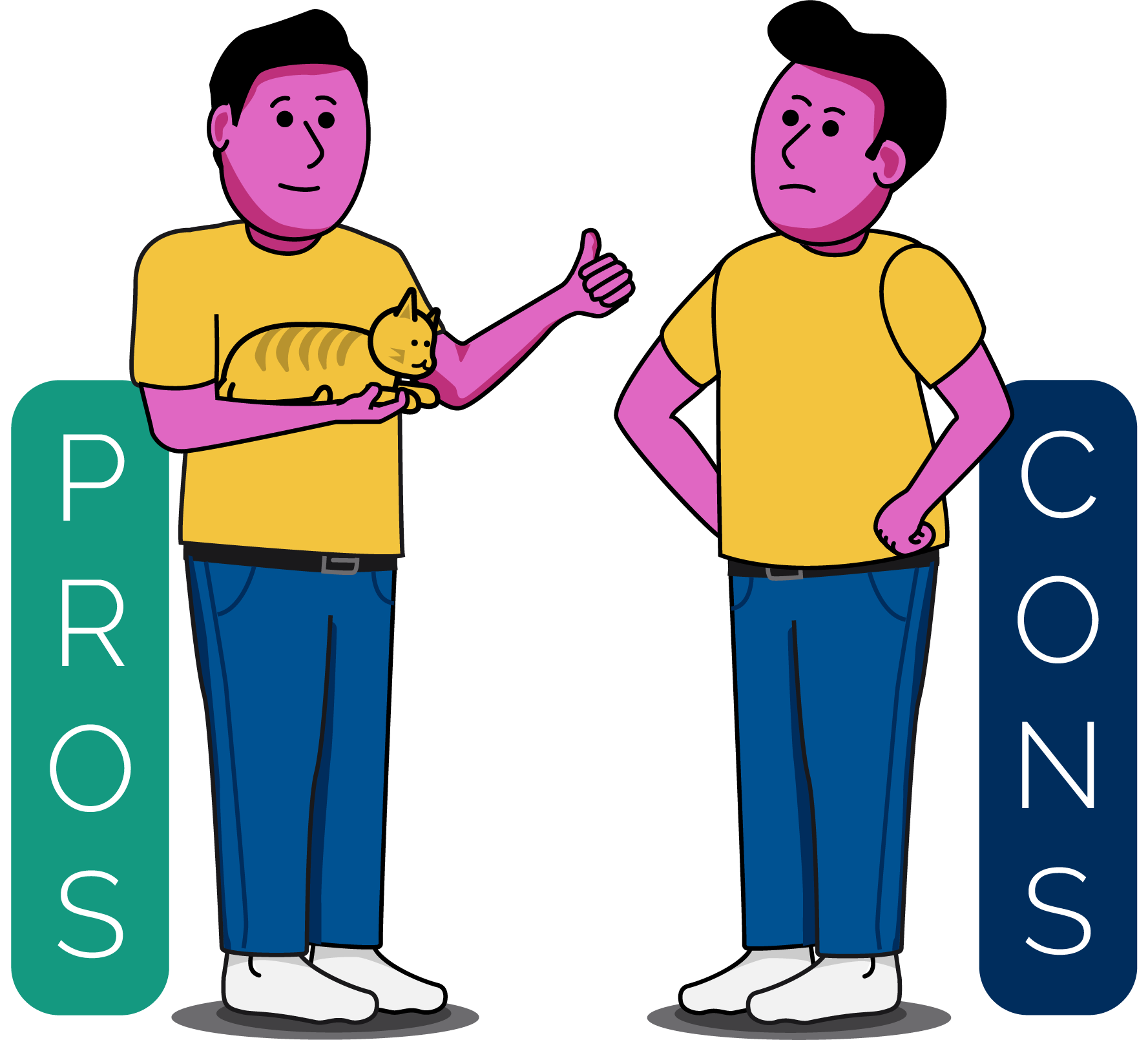
Pros and Cons of Extending a Car Lease
TopSo, a lease extension seems pretty straightforward, right? We all know, though, that there’s no such thing as a free lunch — especially in the dealership world.
While an extension can buy you some much-needed time in the short-term, it might come back to bite you in the long run. Here's the Pros and Cons...
Pros:
Buys you time—no rush to find your next car.
Avoid a down payment—you’re sticking with the same car.
No dealership headaches—skip the sales pitches (for now).
Convenience—if you like your car, why switch?
Cons:
Potential extra fees—your monthly cost could go up. (See our breakdown of
5 fees to watch for at lease end.)
Mileage trouble—going over the limit? Get ready for fees.
Out-of-warranty repairs—if your warranty expires, repairs are on you.
Depreciation hits—your car keeps aging, but your payment doesn’t drop.
Delaying the inevitable—you’ll still have to make a decision later.
The con that rarely makes these lists is opportunity cost. In a market with record-high vehicle prices averaging around $50,000 for a new car, many lessees are sitting on surprise equity because their fixed residual is now well below what the car is worth. Extending walks right past that equity. In 2025 Lease End unlocked $108 million in equity for drivers and captured $73,155,589 in total customer savings, money that comes from buying out and either keeping or selling the car rather than extending or turning it in. (
See the record-high vehicle prices analysis)How Do I Extend a Car Lease?
Top- Contact your lessor. Reach out to your leasing company before your lease expires to get all of the detailed specifics on their extension process. (You should be able to find their contact information on your lease agreement or their website.) They will provide you with details on the extension process, including any paperwork that needs to be completed. Or, you can find your manufacturer listed in our article: Auto Lease Extension Policies by Manufacturer
- Review the terms. Be sure to carefully review the terms of the lease extension, including the new lease duration, monthly payments, and any additional fees or charges that may apply.
- Sign the agreement. If you decide to proceed with the lease extension, sign the lease extension agreement. Make sure you understand all terms and conditions before signing. Then, submit any required documentation, such as a signed lease extension agreement, to your lessor to finalize the extension.
- Continue your lease. Once your extension is approved and processed, continue to make your monthly lease payments as outlined in the agreement until the new lease end date. At that point, you'll have to make a decision again.
Notice how much of that process is phone tag and paperwork with your lessor. That is exactly the friction Lease End built technology to remove. Its
Payoff Intelligence agent, launched in January 2026, navigates lessor phone trees, support chats, and web portals to pull your exact payoff amount, and its AI
Lease Buyout Calculator returns an instant monthly-payment estimate from just your VIN, license plate, and email. If the buyout turns out to be the better move, you can get the number in minutes instead of sitting on hold.
What If My Lease Has Already Ended?
TopIf your lease has already expired and you're still driving the car, contact your lessor immediately. Most leasing companies offer a short grace period (usually 7–30 days), but driving past that window puts you at risk of:
- Daily late fees (often $30–$50/day)
- Insurance coverage gaps, since some policies treat an expired lease as an unauthorized vehicle
- Negative reports to the credit bureaus
- Repossession in extreme cases
The good news: most lessors will retroactively extend your lease for a short period to give you time to choose between turning the car in, extending formally, or buying it out. If the buyout is the right move,
Lease End can often complete the process in a few days, faster than scheduling a return appointment.
Other End-of-Lease Options
TopTurn in your vehicle and apply it toward another lease or purchase.
If you’re really itching to get back into a new lease, you can leverage your current lease turn-in to get a good deal on your next one instead of extending.
Dealerships often offer incentives to customers who turn their car back in and immediately enter another lease, potentially with upgraded features.
Better yet, consider buying a used car from your dealer or another seller. Buying a used car can be more cost-effective than extending your lease, especially if you find a reliable vehicle with low mileage. If you're not interested in keeping the car but have equity, you can
sell your leased car after buying it out.
Read More:
Buy out your lease and keep your car.
If you’re considering an extension because you like the vehicle you have now, buying out and keeping your leased car can be a great option.
Why?
- Familiarity and comfort: You've grown accustomed to your car and love driving it.
- No surprises: You know your car's history and maintenance record, reducing the risk of unexpected issues.
- Cash in on value: Depending on your car’s residual value, you could get a great deal on the car compared to its market value.
- Ownership and equity: Plus, buying your leased car means you own it outright, giving you the freedom to keep it as long as you like...and if you change your mind down the road, you can sell the car and potentially recoup some of your investment.
The equity case is strongest on the cars people most want to keep. In Lease End's 2025 dataset, the top equity winners were all everyday vehicles: the Honda CR-V averaged $7,950 in equity, the Honda Accord $7,378, and the Honda Civic $6,850, with the Toyota Tacoma at $6,598 and the Mazda CX-5 at $6,242 close behind. These are not exotic cars, they are the mainstream models sitting in most driveways, and each one represents thousands of dollars a driver would leave on the table by extending or turning in instead of buying out.
Buy out your lease and sell your car.
If you’re not interested in keeping the car, but you do have equity in the vehicle, you can buy out your car to turn around and sell it.
If your buyout amount is lower than the car’s current value, you'll make money off of your car lease.
How Lease End Can Help
TopYou’ve got options.
Deciding which one is best is the hard part.
Luckily, you’ve got Lease End to help you out. We want to help you think through your lease-end options and find the one that’s right for you. If you decide to buy out your car, we can take care of the stressful parts so ending your lease is as easy as extending it.
We can even hook you up with customizable, extended coverage so you’re not left hanging after your lease ends.
The reason we can say the buyout is often the smarter move is that we have the receipts. Lease End has completed more than 60,000 lease buyouts (and counting) since 2021, including 19,287 in 2025 alone, and facilitated $590 million in vehicle loans last year while unlocking $108 million in equity for drivers. Every quote you get is powered by our own transaction data and our Buyout Score, a proprietary 0 to 100 rating we can generate from just your VIN, license plate, and email. That is how you find out in minutes whether keeping your car beats extending it.
If you're ready to chat through your options with a dedicated advisor, give us a call at
888-307-5197 to get in touch with one of our lease-end experts.
If you'd prefer to start the buyout process online, enter your license plate or VIN number below.