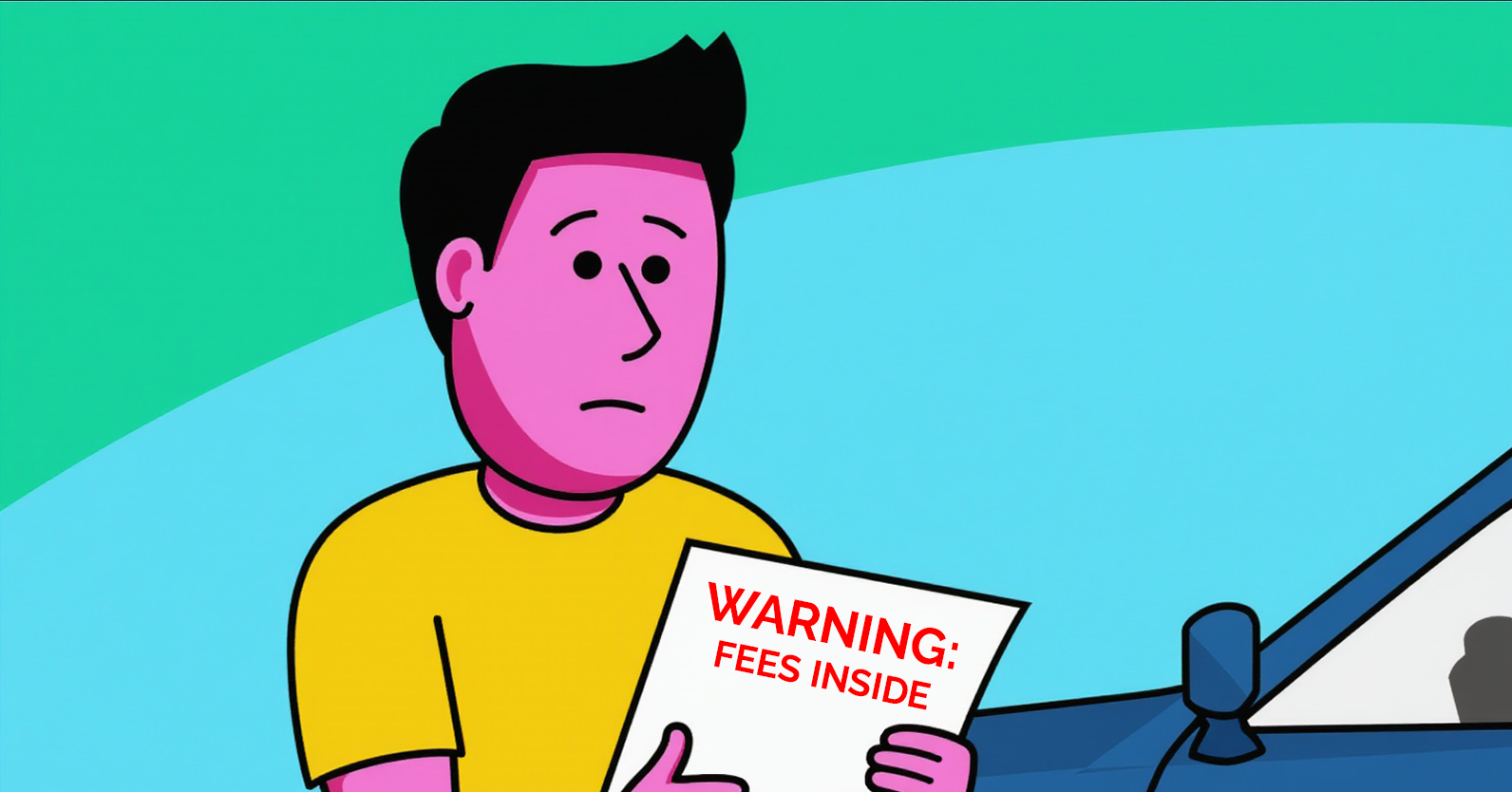
TL;DR (5-minute read): A lease disposition fee is a charge, typically $300 to $500, that your leasing company collects when you return your car at the end of the lease. It covers their cost of prepping and remarketing the vehicle. But here's the good news: if you buy out your lease instead of returning it, you don't pay a disposition fee at all. Lease End can help you do exactly that.
You're nearing the end of your lease, and you're starting to wonder what happens next. You've got a stack of paperwork, a mileage tally, and probably a few questions, including one you may not have thought to ask yet:
Wait, there's a fee just for giving the car back?
Yes. There is. It's called a lease disposition fee, and it's one of those end-of-lease charges that tends to catch people off guard. Not because it's hidden exactly, but because "disposition" isn't a word most of us use in everyday conversation. (Unless you're a 19th-century novelist. Are you? No? Moving on.)
This article will explain exactly what a disposition fee is, how much it typically costs, when you're on the hook for it, and how you can avoid it entirely.
Table of Contents
What Is a Lease Disposition Fee?
TopA lease disposition fee, sometimes called a "turn-in fee" or "termination fee", is a charge your leasing company collects when you return the vehicle at the end of your lease term. It's meant to cover the cost of inspecting, cleaning, transporting, and remarketing the car so it can be resold.
Think of it this way: when you hand back the keys, the leasing company has a used car on their hands. They've got to figure out what to do with it. The disposition fee is their way of offsetting that work, and passing the cost on to you.
It's usually disclosed in your original lease contract (the Consumer Leasing Act requires it), but it's easy to overlook when you're signing a 40-page document and just want to drive your new car home.
How Much Is a Lease Disposition Fee?
TopMost disposition fees fall somewhere in the $300 to $500 range. Some automakers charge less; a few charge more. Here's a look at what some common manufacturers charge:
| Manufacturer / Leasing Company | Typical Disposition Fee |
| Toyota Financial Services | $350 |
| Honda Financial Services | $300–$400 |
| Ford Motor Credit | $350–$400 |
| GM Financial | $395 |
| BMW Financial Services | $350–$500 |
| Mercedes-Benz Financial | $350–$595 |
| Hyundai Motor Finance | $400 |
| Nissan Motor Acceptance | $350 |
Note: Fee amounts can vary by region, vehicle model, and lease agreement. Always check your lease contract for the exact amount.
Not a huge number in isolation, but stack it on top of
mileage overage fees, wear-and-tear charges, and any other end-of-lease surprises, and it adds up fast.
When Do You Have to Pay a Disposition Fee?
TopThe disposition fee kicks in when you return your vehicle to the leasing company or dealership at the end of your lease without leasing or purchasing another vehicle from them. Specifically, it applies in these situations:
- You turn in the car and walk away (no new vehicle)
- You turn in the car and buy or lease from a different manufacturer
- You end the lease early under certain conditions
You typically don't owe a disposition fee in these situations:
- You buy out your leased car (whether through the dealership or through a service like Lease End)
- You lease or purchase another vehicle from the same manufacturer/brand
- Your specific lease contract waives the fee
In other words: the fee is essentially a "goodbye" charge. It's what you pay for not sticking around.
Can You Avoid the Lease Disposition Fee?
TopAbsolutely, and there are a few ways to do it.
Option 1: Buy Out Your Lease
The cleanest way to skip the disposition fee entirely? Don't return the car. If you use a
lease buyout to purchase the vehicle, the leasing company doesn't need to remark it, so there's no disposition fee.
This is what Lease End is built for. We handle the entire buyout process online, financing, paperwork, title transfer, and registration, so you can keep your car without ever setting foot in a dealership. No disposition fee. No doc fees. No DMV line.
Option 2: Lease or Buy a New Vehicle from the Same Brand
Many manufacturers will waive the disposition fee if you stay loyal, meaning you lease or purchase your next vehicle from the same brand. Check with your leasing company to confirm whether this applies and whether any specific timing requirements exist.
Option 3: Negotiate (It's Worth Asking)
Sometimes, especially if you've been a long-term customer or your account is in great standing, a leasing company will waive or reduce the fee. It doesn't always work, but the worst they can say is no.
Disposition Fee vs. Other End-of-Lease Fees
TopThe disposition fee is just one item on a longer potential list of end-of-lease charges. Here's how it fits in with the others:
| Fee | What It Is | Typical Range | Avoidable? |
| Disposition Fee | Charge for returning the car | $300–$500 | Yes, buy out or re-lease same brand |
| Mileage Overage Fee | Penalty for exceeding lease mileage limit | $0.10–$0.30 per mile | Yes, buy out, or buy extra miles upfront |
| Excessive Wear Fee | Charge for damage beyond normal use | Varies widely | Partially, get a pre-inspection |
| Early Termination Fee | Penalty for ending lease before term | Several months' payments | Avoid by completing the full lease term |
| Doc / Admin Fee (Dealership) | Dealership paperwork charge | $200–$500+ | Yes, use Lease End instead |
How a Lease Buyout Eliminates These Fees
TopWhen you buy out your lease through Lease End, here's what changes:
- No disposition fee. You're keeping the car, not returning it.
- No mileage overage fee. You already drove those miles. Once it's yours, nobody's counting.
- No wear-and-tear inspection. You're buying it as-is. The leasing company doesn't get to ding you for a scuffed bumper.
- No dealer doc fees. Lease End is free to use and charges zero documentation fees.
What you
do pay: a competitive buyout loan (based on your
residual value) with monthly payments that often come in lower than leasing a new car.
For context: the average new lease payment in 2025 was $659/month (Experian). The average Lease End buyout payment across all credit tiers is $576.37/month as of May 2026. That's real money.
Final Thoughts: Skip the Fee, Keep the Car
TopThe lease disposition fee isn't the end of the world, but it's also completely avoidable. If you're returning your car because you genuinely want something new, that's fine. Just know it's coming and plan for it.
But if you like your car, know its history, and don't want to deal with a new lease or a dealership visit? Buying out your lease through Lease End is probably the smarter play. You skip the disposition fee, sidestep the wear-and-tear inspection, and say goodbye to mileage limits, all from your couch.
Frequently Asked Questions
TopWhat is a lease disposition fee?
A lease disposition fee is a charge collected by the leasing company when you return your vehicle at the end of the lease term without purchasing or leasing another vehicle from the same brand. It typically ranges from $300 to $500 and covers the cost of inspecting, cleaning, and re-marketing the vehicle.
Is the disposition fee negotiable?
Sometimes. If you're a long-standing customer or your account is in good standing, it's worth asking. Many manufacturers will also waive it if you lease or purchase your next vehicle from the same brand. However, the most reliable way to avoid it is to buy out your current lease instead of returning it.
Does buying out my lease eliminate the disposition fee?
Yes. If you buy out your leased vehicle, through the dealership or through a service like Lease End, there is no vehicle to "return," so no disposition fee applies. This is one of the most straightforward ways to avoid the charge.
Where is the disposition fee listed in my lease?
It should be disclosed in your original lease contract, typically under "end-of-term" or "termination" charges. The Consumer Leasing Act requires all lease fees to be disclosed upfront. If you're having trouble finding it, call your leasing company directly and ask them to confirm the amount.
Can I avoid the disposition fee by leasing another car from the same brand?
In most cases, yes. Major manufacturers like Toyota, Honda, Ford, and BMW will typically waive the disposition fee if you lease or purchase another vehicle from them. Timing requirements may apply, usually the new lease or purchase must happen within a specific window. Confirm directly with your leasing company.
Does Lease End charge a disposition fee?
No. Lease End is free to use and charges zero documentation fees. When you buy out your lease through Lease End, the disposition fee doesn't apply, and we don't add any fees of our own on top of your buyout loan. Our financing partners earn revenue from the loan itself, not from charging you extra.
What happens if I don't pay the disposition fee?
If you return the car without paying the disposition fee and it's in your contract, the leasing company will typically send you a bill. Ignoring it can lead to it going to collections and potentially impacting your credit. It's better to address it directly, or avoid it entirely by buying out your lease.