TL;DR (8-minute read): Adding a co-buyer to your lease buyout loan can lower your interest rate by 2 to more than 4 percentage points, depending on your credit, while also increasing your chances of getting approved. Based on Lease End lease buyout transactions, the biggest improvements came from drivers with lower credit scores, but even borrowers with excellent credit often received better financing offers.
If you're thinking about buying out your lease, you've probably started asking yourself a few questions:
- Can I afford the payment?
- Will I qualify for financing?
- Should I ask someone to co-sign?
That last question can feel awkward. Nobody loves asking a family member or spouse to share responsibility for a loan. But based on what we've seen from thousands of lease buyout transactions, it may be one of the most impactful financial decisions you make during the entire process.
In fact, we analyzed nearly
1,200 lease buyout applications where the exact same driver applied for financing twice. Once by themselves, and once with a co-buyer.
The vehicle, loan amount, and market conditions stayed the same. The only thing that changed was adding another person to the application.
The results were difficult to ignore.
How a Co-Buyer Can Change Your Lease Buyout Loan
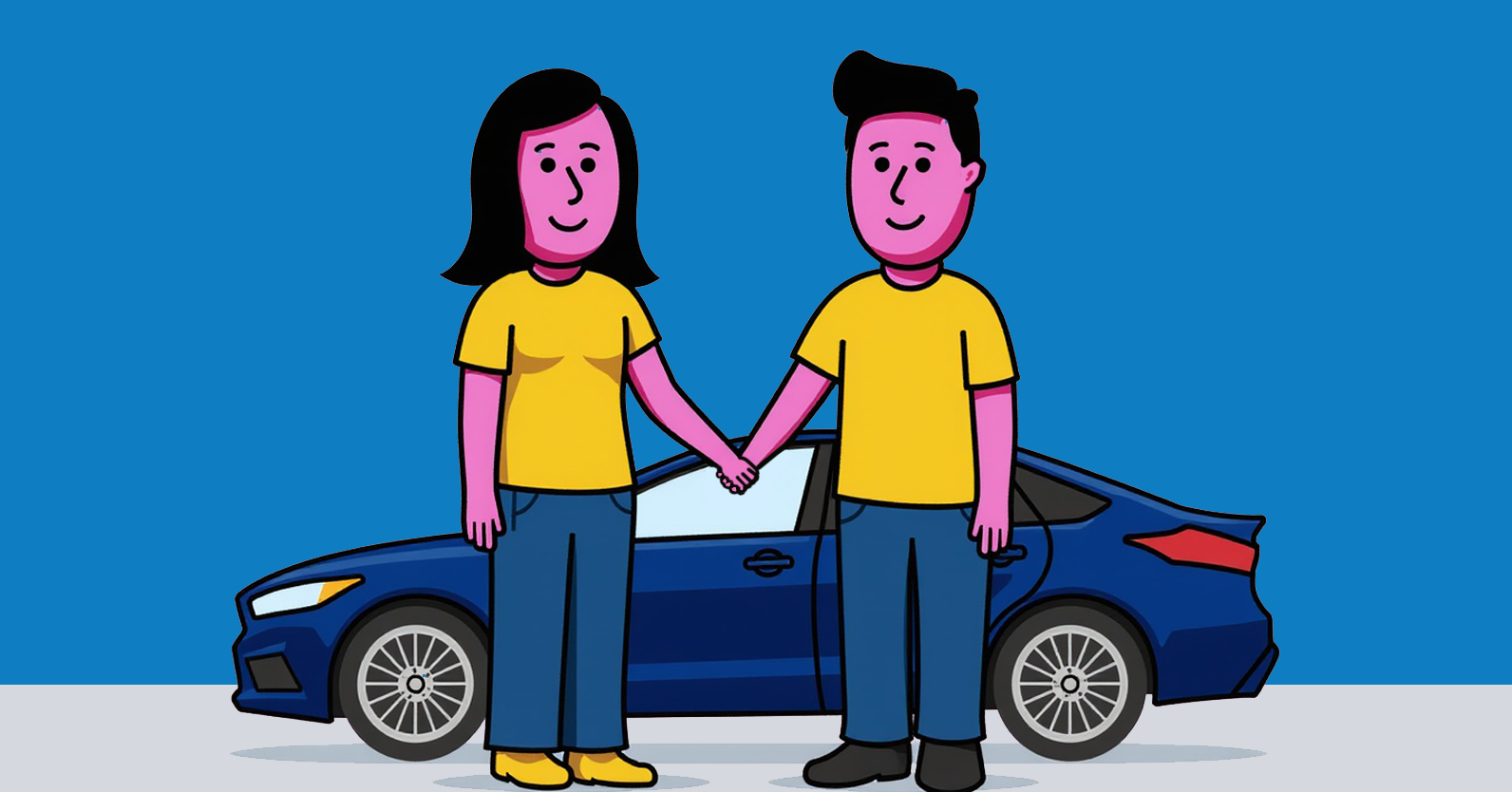
A co-buyer, sometimes called a co-signer or co-borrower, agrees to share responsibility for repaying the loan.
To a lender, that means there are now two people responsible for making payments instead of one.
That changes how the lender evaluates risk.
Instead of looking at one income, one credit profile, and one borrower, they're evaluating the combined strength of the application. In many cases, that leads to lower interest rates, better approval odds, or both.
What's interesting is that this wasn't just true for borrowers rebuilding their credit. It happened across every credit tier we studied.
Here's What Lease End's Data Found About Co-Buyers
Based on 1,197 lease buyout applications processed in 2026, adding a co-buyer lowered the average offered APR in every credit category.
| Credit Tier | Solo APR | Co-Buyer APR | Difference |
| Deep Subprime (<580) | 19.35% | 14.79% | -4.56% |
| Subprime (580-619) | 15.99% | 12.55% | -3.44% |
| Near Prime (620-659) | 14.63% | 11.04% | -3.60% |
| Prime (660-719) | 12.51% | 9.77% | -2.73% |
| Super Prime (720+) | 9.17% | 6.94% | -2.23% |
The biggest improvements happened for drivers with lower credit scores. Which isn't surprising. Those borrowers have the most to gain when another qualified person joins the application.
But here's what did surprise us:
Even drivers with credit scores above 720 still lowered their average interest rate by more than 2 percentage points. That's meaningful, especially on a loan you'll likely keep for several years.
What Does a Lower Interest Rate Actually Mean?
Saving a few percentage points sounds nice. But what does it actually look like?
Imagine financing a $25,000 lease buyout over 60 months.
If your interest rate drops by four percentage points, your monthly payment can decrease by roughly $60, and you could save around $3,600 in total interest over the life of the loan.
That's not because the car suddenly became cheaper. It's because your financing did.
The lease buyout price is only one piece of the equation. The loan you choose has just as much impact on what you'll ultimately pay.
Curious what those numbers could look like for your own vehicle?
Automatic AI can estimate your buyout amount and monthly payment in just a few minutes.
Approval Odds Improved Too
Interest rates weren't the only thing that changed.
Approval rates increased across every credit tier as well.
| Credit Tier | Solo Approval | Co-Buyer Approval |
| Deep Subprime | 46.5% | 58.7% |
| Subprime | 56.9% | 67.9% |
| Near Prime | 60.9% | 71.1% |
| Prime | 68.4% | 75.2% |
| Super Prime | 78.8% | 85.7% |
For someone with a lower credit score, adding a co-buyer wasn't just about getting a better loan. It often meant getting approved at all.
And even borrowers with excellent credit benefited. Lenders consistently viewed two qualified borrowers as lower risk than one.
Why Does a Co-Buyer Help So Much?
There isn't one single reason.
Based on the data, we know adding a co-buyer improves financing outcomes. What we can't say with certainty is exactly which factor lenders value most.
- Maybe it's the second income.
- Maybe it's the combined credit history.
- Maybe it's simply having another person legally responsible for repayment.
Lenders don't tell us.
What we do know is that the effect is consistent enough to show up across thousands of real lease buyout transactions.
Why the Advantage Was Even Bigger in 2026
One trend stood out when we compared 2025 and 2026.
For many borrowers, the co-buyer advantage actually grew because lenders have become more selective.
Interest rates remain higher than they were just a few years ago, and banks are paying closer attention to risk than they did during the low-rate environment.
That makes strong loan applications even more valuable.
If adding a co-buyer reduces a lender's perceived risk, today's lending environment rewards that more than it did previously.
Should You Add a Co-Buyer?
It depends on your situation, but the data suggests a few clear guidelines.
You should seriously consider adding a co-buyer if:
- Your credit score is below about 660.
- You're worried about getting approved.
- You want to qualify for a lower monthly payment.
- Your spouse or another household member is already financially involved in the vehicle.
Even if your credit is already strong, it's still worth exploring. Many borrowers assume excellent credit means there's nothing left to improve. The numbers suggest otherwise.
Before You Ask Someone to Co-Sign
Adding a co-buyer isn't a free upgrade. They're taking on legal responsibility for the loan with you. If payments stop, their credit can be affected too. That's why this decision should always involve an honest conversation before anyone signs paperwork.
The financial upside can be significant. But both people need to understand exactly what they're agreeing to.
The Bottom Line
Buying out your lease is already a major financial decision. The financing you choose can make an even bigger difference.
Based on Lease End lease buyout transactions, adding a co-buyer consistently resulted in lower interest rates and higher approval odds across every credit tier we analyzed. For some borrowers, it meant saving thousands of dollars over the life of the loan. For others, it meant qualifying for financing they otherwise may not have received.
Use
Automatic AI to estimate your buyout amount and monthly payment, compare financing options through Lease End's lending partners, and see whether adding a co-buyer could help you secure a better loan.
Frequently Asked Questions
Does a co-buyer need better credit than me?
Not necessarily. While stronger credit can certainly help, lenders also consider factors like income, debt, and overall repayment ability. Based on Lease End's data, we know co-buyers improve outcomes. We just can't isolate which factor lenders value most.
What's the difference between a co-buyer and a co-signer?
The terms are often used interchangeably, but they generally refer to someone who shares legal responsibility for the loan. Specific definitions can vary by lender.
Does co-signing hurt the other person's credit?
Simply becoming a co-buyer doesn't automatically hurt someone's credit. However, the loan appears on their credit profile, and missed or late payments can affect both borrowers.
Can I remove a co-buyer later?
Possibly, but not automatically. In many cases, removing a co-buyer requires refinancing the loan in your own name after you've established a payment history.
Can Lease End help me compare financing options?
Yes. Instead of applying with lenders one by one, Lease End works with multiple lending partners to help drivers compare financing options while simplifying the paperwork involved in buying out a lease.