TL;DR (6-minute read): You can finance a lease buyout directly through your bank, but that means seeing only one lender’s offer. Lease End lets you compare financing options from multiple lenders while also handling the payoff, paperwork, title, registration, and DMV process.
Your lease is ending, you want to keep your car, and you need a loan to buy it out.
Calling your bank probably feels like the obvious next step.
After all, you already have an account there. They already know you. And if your bank offers auto loans, why add another company to the equation?
You absolutely can finance a lease buyout directly through a bank or credit union. But before you do, it’s worth understanding the difference between getting
one lease buyout loan from one bank and using
Lease End to compare multiple financing options and handle the buyout process for you.
Because one loan is one option. But inquiring with multiple banks means you're more likely to get your best loan option. And that's exactly what Lease End does.
Can You Get a Lease Buyout Loan From a Bank?
Yes.
Many banks, credit unions, and auto lenders offer loans that can be used to purchase your leased vehicle.
The process is similar to financing any other used vehicle. The lender considers factors such as your credit, income, vehicle, loan amount, and desired loan term to determine whether you qualify and what rate you may receive.
There is one major limitation to applying directly with a bank, though:
You only see what that bank is willing to offer you.
If you apply with another bank, you may get a different interest rate, term, or monthly payment.
And just like comparing prices for any other expensive purchase, shopping around when it comes to your car loan can make a huge difference in price.
One Bank vs. Multiple Lenders
Say you already bank with your local credit union.
You apply directly and receive an offer for your lease buyout. It might be a great offer.
But how do you know?
You could individually apply with several other lenders and compare their offers yourself. Or you could use Lease End, which works with multiple lending partners to help drivers find financing for their lease buyouts.
You complete one application with Lease End, and
we shop our network of lending partners to find the financing options you’re eligible for.
That gives you something an individual bank can’t:
Competition for your loan.
Lease End is also one of the largest processors of lease buyout loans for
lending partners including Capital One and Ally. Our volume helps us access competitive financing for drivers looking to buy out their leases.
And because Lease End is free to use, you don’t pay us an additional service or document fee for doing the shopping.
How Much Can Your Lease Buyout Rate Matter?
Quite a bit.
Even a seemingly small difference in APR can add up over a multi-year auto loan.
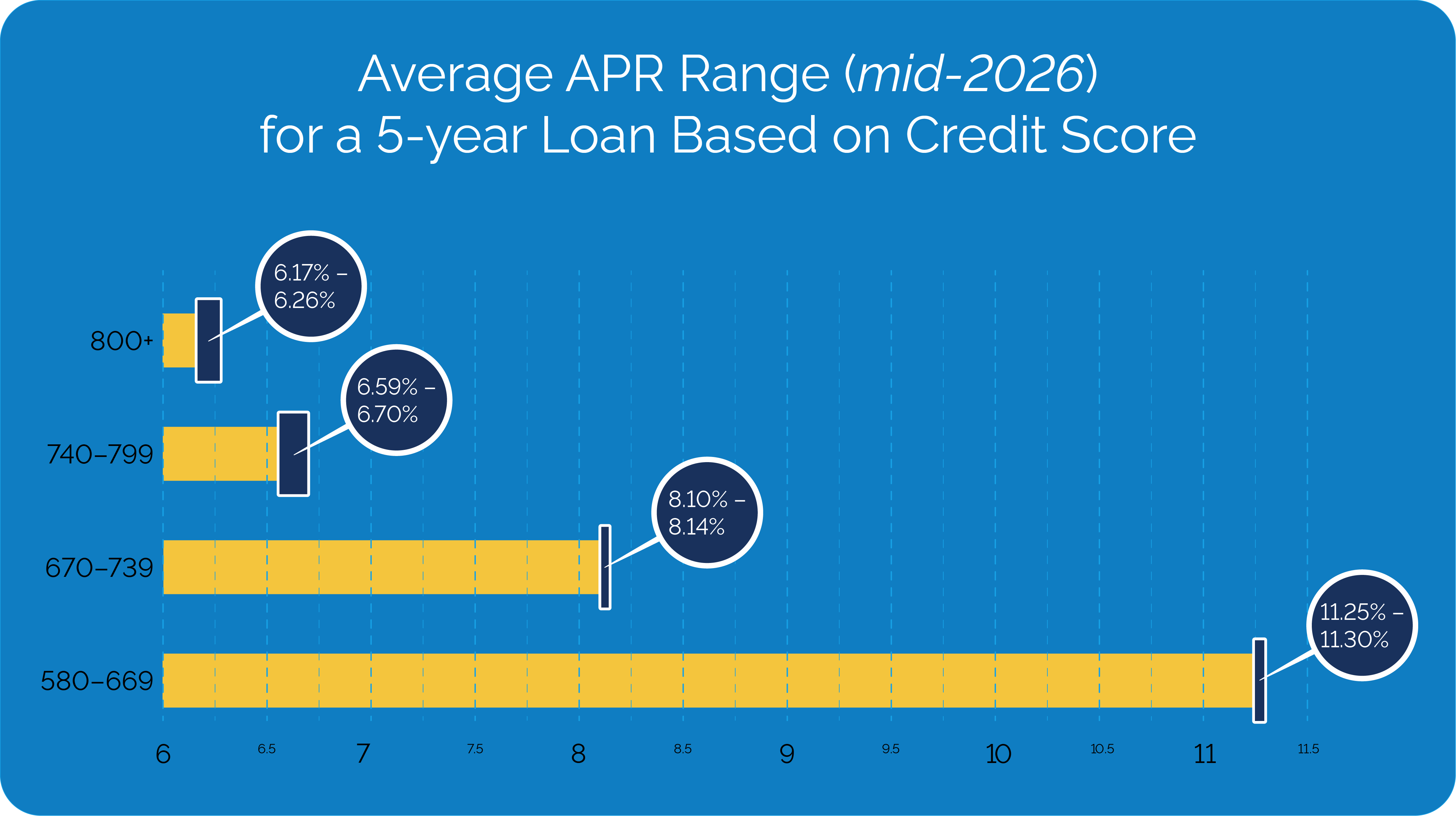
As of mid-2026, average lease buyout APRs vary significantly by credit profile:
| Credit Score | Average APR |
| Above 800 | 6.17%–6.26% |
| 740–799 | 6.59%–6.70% |
| 670–739 | 8.10%–8.14% |
| 580–669 | 11.25%–11.30% |
Your actual rate will depend on your credit profile, vehicle, loan term, lender, and other factors.
But this is exactly why comparing offers matters.
On a $35,000 loan paid over 60 months, even a relatively small difference in interest rate can mean hundreds of dollars over the life of the loan.
According to
Money Crashers, Lease End's rates beat the used-car averages published by Experian “at every comparable credit band.”
So while your existing bank might ultimately give you your best offer, there’s value in finding out rather than assuming.
A Lease Buyout Is More Than Getting a Loan
This is one of the biggest differences between financing directly through a bank and using Lease End.
A lease buyout involves more than borrowing enough money to purchase the vehicle.
Depending on your lease and state, the process can involve:
- Getting an official payoff from your leasing company
- Paying applicable sales tax and fees
- Coordinating payment with your lessor
- Transferring the vehicle title
- Registering the vehicle in your name
- Getting new plates or registration documents
- Completing state-specific DMV paperwork
A bank's primary job is providing the financing.
Lease End is specifically built around completing lease buyouts.
We shop multiple lenders for financing, but we also handle the paperwork, title, registration, and DMV process required to take you from leasing your vehicle to owning it.
You can complete the process online without having to figure out every step yourself.
What Does Lease End Cost?
Lease End is free for drivers to use.
There’s no Lease End application fee, service fee, or document fee.
Dealerships may add documentation, administrative, or other dealer fees to a lease buyout. The original draft notes that these can sometimes reach hundreds of dollars.
Going directly to your bank can help you avoid some dealership-related costs.
Lease End gives you another option: skip the dealership while also having someone handle the administrative work associated with the buyout.
What If You Already Have a Relationship With Your Bank?
Then your bank should absolutely be part of the comparison.
Some financial institutions offer relationship discounts or other benefits to existing customers. And if your bank gives you a competitive offer, there’s nothing wrong with taking it.
The important thing is knowing whether the offer is actually competitive.
One lender may offer you a lower rate. Another might give you a term that produces a monthly payment that works better for your budget.
Rather than asking:
“Can my bank finance my lease buyout?”
The more useful question is:
“What financing options am I eligible for?”
Then you can compare them.
Should You Buy Out Your Lease in the First Place?
Before choosing who should finance your buyout, there’s an even bigger question:
Does keeping the car make sense for you?
Positive equity is one great reason to consider it. If your vehicle is worth more than your buyout cost, buying it can allow you to retain that value rather than simply returning the vehicle.
But positive equity isn't the only reason to buy out a lease.
Maybe you love your specific car. You know its maintenance history, you know it’s reliable, and you'd rather keep it than start shopping again.
Maybe you’ve exceeded your mileage allowance or have wear and tear that could result in substantial charges when you return it.
For example, being $1,500 upside down on your buyout doesn't necessarily mean returning the vehicle is automatically the better financial choice if returning it would trigger $3,000 in mileage, wear, and other lease-end charges.
You may also prefer putting your monthly payment toward a vehicle you'll eventually own instead of starting another lease.
That’s why the decision should account for the whole situation, not just the difference between residual value and market value.
Bank vs. Lease End: Which Should You Choose?
Going directly through your bank can make sense if you've already compared financing and know they're offering the best option for you.
Lease End makes more sense if you want to:
- Compare financing options from multiple lenders
- Avoid shopping banks individually
- Complete your lease buyout without going to a dealership
- Have someone handle your payoff, paperwork, title, and registration
- Pay no additional Lease End service or document fees
The biggest difference isn't that banks can't finance lease buyouts.
It's that Lease End was built specifically to handle them.
Compare Your Lease Buyout Options
If you already have a quote from your bank, great.
Now you have something to compare.
Lease End can shop our network of trusted lending partners and handle the rest of the lease buyout process, from your payoff through your
title and registration.
The initial process takes about 12 minutes, and Lease End is free to use.
See your lease buyout options and find out how your bank's offer compares.
Rates referenced reflect averages as of mid-2026 and vary based on credit profile, loan term, lender, vehicle, and other factors.