TL;DR (4-minute read): If your lease is ending in Utah, buying your car is very often the smarter move, and the data backs it up harder here than almost anywhere. Based on lease buyout transactions Lease End has processed in Utah, 91.2% of Utah lessees had positive equity, the highest rate of any state we measured, with an average of $5,174 in equity above their buyout price. Add in the highest average mileage in the country (40,328), and Utah is close to a best-case buyout market.
Should You Buy Out Your Lease in Utah?
If your lease is coming to an end, you’re probably asking:
“Do I keep my car… or start over?”
The main options are:
- Return your lease
- Trade it in
- Buy it out
In Utah, buying your lease often makes a lot of sense, especially if you’ve been putting your car to good use (which… let’s be real, you probably have).
Between weekend trips to Park City, ski runs up Big Cottonwood Canyon, or road trips through Zion, Utah drivers don’t exactly baby their mileage.
And that’s where buyouts start to shine.
Utah Lease Buyout Data (What We’re Seeing)
Based on 216 funded lease buyout transactions Lease End has processed in Utah between January 2025 and July 2026, here's what Utah drivers are actually walking away with:
- Positive equity rate: 91.2%, the highest of any state in our data
- Average equity: $5,174
- Average buyout price: $26,930
- Top make bought out: Toyota (15.3% of Utah buyouts)
- Average mileage at buyout: 40,328, also the highest of any state
- GAP take-rate: 57.9%, highest in our data
- VSC take-rate: 42.6%
- Average credit score: 699
- Average income: $113,702
- Employment rate: 92.2%, highest of any state in our data
- Average APR: 8.66%
- Average new monthly payment: $546
Equity here is the difference between your car's retail market value and your buyout price. Your actual take-home number will be lower once remaining lease payments, sales tax, and registration are factored in.
What stands out right away
- Utah leads the country in positive equity. At 91.2%, Utah has the highest share of lessees sitting on positive equity of any state we measured. Roughly nine out of ten Utah drivers who came to us had a car worth more than their buyout price.
- Mileage is… high (no surprise). At 40,328 miles, Utah drivers are well over the typical lease limit, the highest average of any state in our data.
- Utah drivers have strong credit and steady work. A 699 average score and a 92.2% employment rate, the highest employment rate of any state we measured, means most Utah drivers qualify for solid financing.
Granted, you should always take averages with a grain of salt since every situation is different. Run your own numbers here:
Why Lease Buyouts Make So Much Sense in Utah
1. Utah has the best equity odds in the country
This is the headline. Across every state Lease End has enough data on, Utah comes out on top: 91.2% of Utah lessees had positive equity at buyout, averaging $5,174 above their buyout price on a $26,930 average buyout.
What makes that remarkable is that it's happening alongside the highest mileage in the country. Normally, more miles means less equity. Utah is running both at once, largely because Toyota is the state's most-bought-out make (15.3% of Utah buyouts), and Toyota holds resale value about as well as anything on the road.
2. You’ve probably gone over your mileage (and that’s okay)
Utah is not a “stay close to home” kind of state.
Between:
- Ski season
- National parks (Zion, Arches, Bryce Canyon)
- Weekend drives through the mountains
…it adds up quickly.
With average mileage at 40,328 miles, many drivers are already over their lease limit.
That can mean:
- $0.10–$0.30 per mile
- Easily $1,000+ in over-mileage penalties
Buying your lease? 👉 You skip all of that.
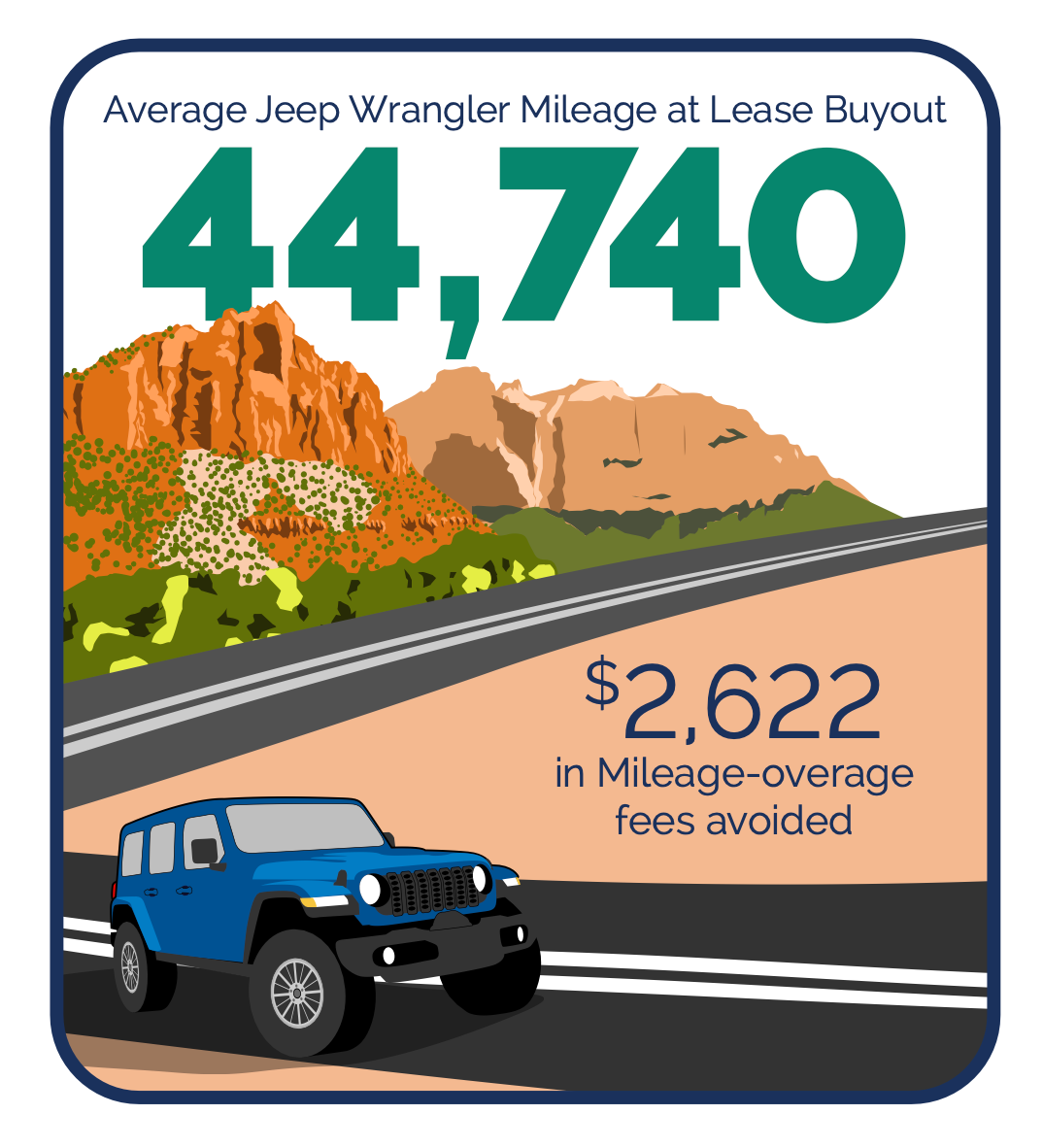
Case study: According to
Lease End data, in 2025, the Jeep Wrangler was the second most bought out vehicle and the average mileage was over 44K. On average, drivers saved more than $2,500 in over-mileage fees alone (not including additional savings) by buying out their lease!
3. Your credit gives you leverage
Utah drivers average a 699 credit score, which is a strong position.
Even though the average APR is 8.66%, many drivers can:
- Qualify for better-than-average rates
- Shop lenders for competitive offers
And that’s where local and regional lenders really help.
Utah drivers protect their buyouts more than anyone
Here's a pattern we only see in Utah: 57.9% of Utah buyouts include GAP coverage, the highest rate of any state in our data. VSC (vehicle service contract) adoption sits at 42.6%, also above the national norm.
That tracks with the mileage story. When you're putting 40,000+ miles on a car before you even own it, whether that's canyon commutes, Moab weekends, or ski season round trips, you're going to keep piling them on afterward. Utah drivers seem to know that and are pricing the risk in.
Worth saying plainly: neither GAP nor a service contract is required, and neither is right for everyone. Your advisor will lay out what each one costs and what it actually covers so you can decide with the numbers in front of you.
4. Your payment might actually stay lower
The average buyout payment in Utah is $546/month, which is:
- Slightly below the national average (~$563)
- Typically lower than starting a brand-new lease
In today’s market, that’s a big win.
5. Your car already fits your lifestyle
Utah isn’t exactly Corolla-only territory (though shoutout to the Civics holding it down ;)).
Drivers here need:
- All-weather capability
- Space for gear
- Reliability for longer drives
And that shows up clearly in the data.
What Utah Drivers Are Buying Out
Most popular buyout vehicles:
- Mazda CX-5
- Volkswagen Atlas
- Toyota 4Runner
- Ram 1500
- Jeep Wrangler
- Honda Civic
- Toyota Tacoma
- Subaru Ascent
- Kia Sorento
- Volkswagen Tiguan
At the make level,
Toyota is the single most bought-out brand in Utah, at 15.3% of all Utah buyouts, and that's a big part of why Utah's equity numbers look the way they do. If you're driving a leased Toyota, our
Toyota lease buyout guide breaks down residual values, Toyota Financial Services' buyout process, and what to expect on fees.
The vibe of this list?
Adventure-ready meets everyday practical:
4Runner, Wrangler, Tacoma → weekend-ready
CX-5, Atlas, Tiguan → family + daily driving
Civic → reliable, efficient fallback
This lines up with national trends where SUVs dominate about 65% of buyouts according to the aforementioned annual report.
A Little Utah Context (Why This All Tracks)
Utah consistently ranks as one of the fastest-growing states, with expanding suburbs and plenty of driving between cities and recreation areas.
According to the
U.S. Census Bureau, commuting and travel patterns reflect a spread-out population with regular driving needs.
Translation? People drive more here. A lot more.
And when you drive more:
- Lease limits get blown past
- Buyouts become more financially logical
When a Lease Buyout Makes the Most Sense
A buyout is usually the right call if:
- You’ve gone over mileage (very common in Utah)
- You like your current car
- Your payment is reasonable
- Your equity is neutral or positive
When You Might Choose Something Else
To be fair—buyouts aren’t always the move.
You might consider returning or trading in if:
- Your car has negative equity
- You want something totally different
- Your budget has changed
FAQs
Do Utah drivers usually have equity in their lease?
More often than almost anywhere. Based on Lease End's Utah transactions from January 2025 through July 2026, 91.2% of Utah lessees had positive equity, the highest rate of any state we measured, averaging $5,174 above their buyout price before taxes, fees, and any remaining payments.
Is it worth buying out a lease in Utah?
Yes—especially if you’ve gone over mileage or have strong credit. Many Utah drivers save by avoiding fees and keeping their car.
Why is mileage so high in Utah?
Between commuting, outdoor recreation, and travel between cities, Utah drivers naturally rack up more miles than average.
What’s the average payment in Utah?
About $546/month, based on Lease End data.
Can I finance my lease buyout?
Yes—most drivers use loans through banks, credit unions, or online lenders.
What happens if I return my lease?
You may pay mileage penalties, wear-and-tear fees, and lose any equity.