TL;DR (4-minute read): Follow the basics (call for help, document everything, notify your insurer and leasing company), stick to lease-approved repairs, and lean on GAP insurance if it’s totaled. And if you’re worried about lease-end fees or inspections after an accident, buying out your lease can be a clean way to keep the car and skip the dealership drama.
Across 19,287 lease buyouts Lease End completed in 2025, every one of the ten most popular buyout models carried positive average equity, ranging from $2,397 on a Jeep Wrangler to $7,886 on a Honda CR-V. That equity is the money most drivers do not realize is sitting in a car they are about to hand back after an accident.
Quick Answer: If you crash a leased car, call emergency services if anyone is hurt, document the scene, exchange insurance information, then notify your insurance company and your leasing company—typically within 24–48 hours. Get any repairs done at a lease-approved shop. If the car is totaled, GAP insurance covers the difference between what your insurance pays and what you still owe on the lease.
Table of contents
We really hope you’re reading this out of pure curiosity. But if What if I crash my leased car? isn't a hypothetical question for you, hang in there—we’ve got you covered.
Getting into an accident is a stressful experience in any circumstance. But it can be even more complicated when you're driving a leased car. If you find yourself in this situation, it's essential to understand what happens next.
Here's a guide to help you navigate the aftermath of a leased car accident, including what happens next and how it can affect your
lease agreement. For more on the specific clauses to look for in your contract, see our guide on
how to read a car lease agreement.
Let’s say you just got into an accident in your leased car.
First, check yourself and any other passengers or drivers involved for injury.
If there are injuries or significant damage, call emergency services, including medical assistance, immediately. They will help ensure everyone's safety and provide assistance as needed.
Be sure to obtain a copy of the police report, as it will be required when filing an insurance claim. State laws vary on when a police report is mandatory—generally, accidents involving injury, fatality, or property damage over a set dollar threshold (often $1,000–$2,500) must be reported. When in doubt, file one. It also protects you in hit-and-run scenarios where you’ll need documentation to file an insurance claim.
TopThe next step after a car accident is to assess the damage to your leased vehicle.
Take photos and videos of the crash site, including the vehicles, any visible damages, and the surrounding area. Make sure to exchange insurance information with the other driver(s), if applicable.
Photograph your odometer while you are documenting everything else. Mileage matters more than most drivers expect at lease-end. Across Lease End 2025 transactions, the average driver hit lease-end at 36,954 miles, which is 954 miles past the standard 36,000-mile cap. With overage fees running 10 to 30 cents per mile, that is up to $300 owed before anyone even looks at accident damage. Some model groups run far higher: Jeep Wrangler lessees in the Lease End dataset averaged 44,740 miles, or 8,740 over the cap, which works out to roughly $2,622 in overage exposure on top of any repair-related charges.
This documentation will be essential when dealing with insurance and your leasing company. Take more photos than you think you need, wide shots of the scene, close-ups of every dent and scratch, and pictures of the other vehicle’s license plate. Skid marks, road conditions, and traffic signs all matter if fault is disputed later.
3. Review your lease agreement and communicate with the leasing company
TopWe’re walking you through the general steps of this process, but make sure to consult your lease agreement and check with your dealership to confirm their exact instructions.
Most lease agreements require that you report an incident in the vehicle shortly after the accident (usually 24-48 hours). They will require information about the accident, including the extent of the damage and your plan to contact insurance.
It's crucial to review your lease agreement to understand your obligations in the event of an accident. Most lease agreements require you to maintain comprehensive and collision insurance coverage, which can help cover the cost of repairs or the value of the vehicle in the event of a total loss.
However, you may still be responsible for any remaining lease payments and fees.
4. Notify your insurance company
TopThe next step is to notify your insurance company about the accident. Provide them with all the necessary details, including the date, time, and location of the accident, as well as the extent of the damage.
Your insurance company will guide you through the claims process and provide instructions on how to proceed. Handle this as you normally would with any car—just make sure to provide any information about the lease as requested.
Depending on the insurance company’s assessment, you may be responsible for arranging any repairs to the car. If it’s not considered a total loss, you’ll need to get the car repaired through a shop that your dealership or lease agreement approves. For more on what's allowed (and what isn't) when it comes to
repairing your leased vehicle, check out our full guide.
This is super important—although it may be more of a pain to work within these constraints, if you don’t go by-the-book you may be charged for the damage/repairs again at the end of your lease as well. The same risk shows up at lease return as
excess wear and tear charges, even repairs done at unauthorized shops can be flagged and re-billed at turn-in.
Do you have to report damage to a leased car?
TopShort answer: yes. Almost every lease agreement requires you to report accidents and damage to the leasing company, usually within 24–48 hours of the incident. Failing to report can violate your lease contract and may lead to additional fees, or, in rare cases, default. Even for minor cosmetic damage that you plan to repair yourself, check your contract first; unauthorized repairs are one of the most commonly flagged issues at lease-end inspection.
You don’t necessarily need to file an insurance claim for every ding (a small scratch you’ll absorb personally may not be worth a premium increase), but you do need to follow the reporting clause in your lease. When in doubt, call your leasing company before doing anything else.
What happens if you total a leased car?
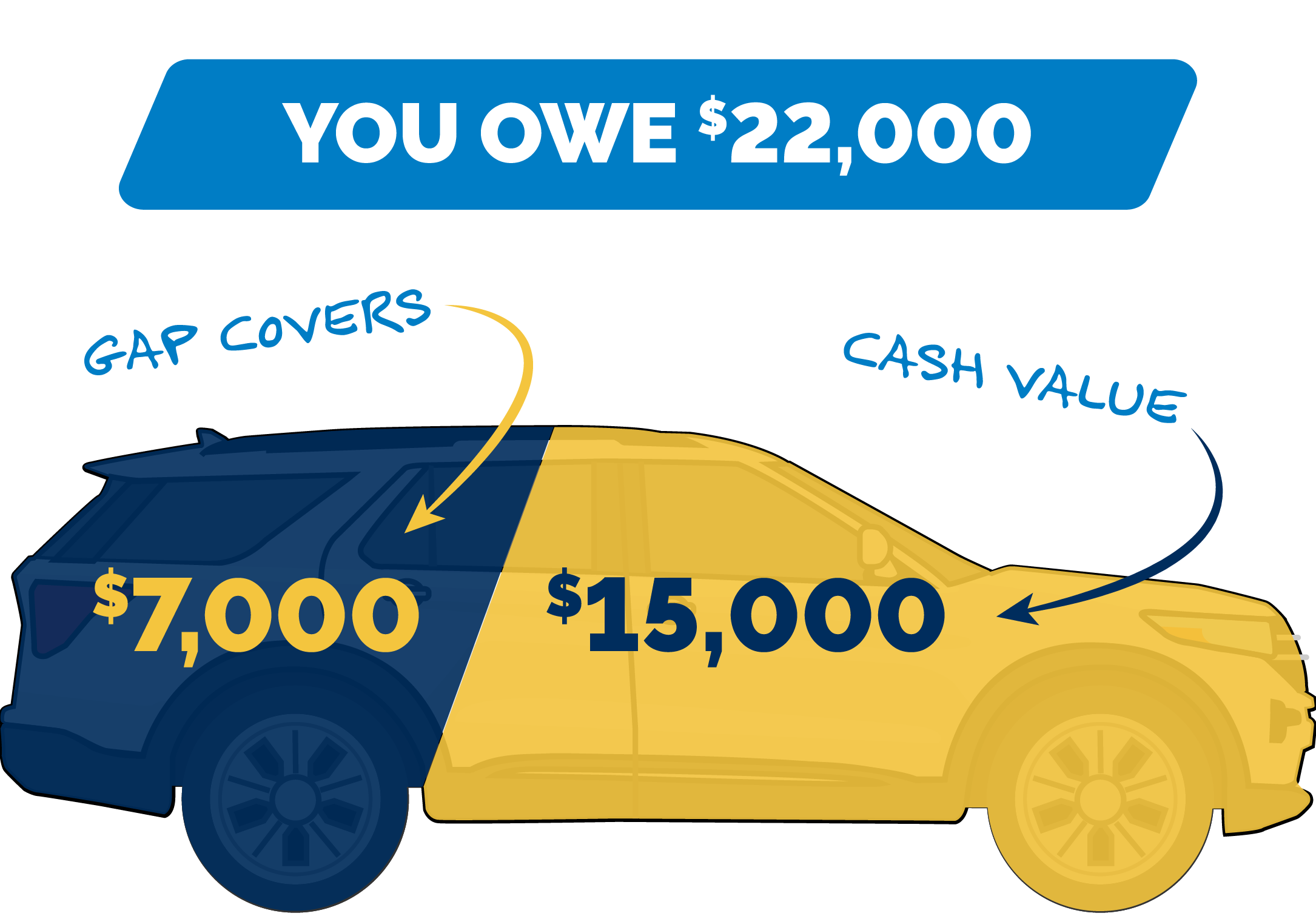
TopIf your leased vehicle is deemed a total loss, you may be responsible for the difference between the vehicle's value and the amount owed on the lease (any payments remaining for the lease term). This is known as the "gap" amount, and it can be significant.
But if you have the right coverage, it may not be as bad as it sounds (If you’re one of the lucky people reading this for fun, pay attention here for future reference!).
When you leased your car, you were likely required—or encouraged—to get GAP insurance. If your car is totaled, GAP insurance is what’ll save you.
Guaranteed Asset Protection (GAP) insurance covers the difference between what you may owe on the car and its current value if your car is totaled. It picks up where regular insurance plans stop coverage.
For a full walkthrough of what happens when a leased car is declared a total loss, including who receives the insurance settlement, how actual cash value is calculated, and what you’ll still owe if you don’t have GAP—see our dedicated guide:
What happens if your leased car is totaled.
Damage charges rarely arrive alone. Lease End Maine transaction data shows how these stack: the average
Maine driver reaches lease-end at over 41,000 miles, roughly 5,000 over the standard limit, which is about $1,000 in overage fees before a $350 disposition fee is added, for $1,350 in return costs. Against that, the average Maine buyout carried $310 in positive equity, a swing of more than $1,600 in favor of keeping the car. Add repaired accident damage that an inspector may flag, and the case for buying out gets stronger, not weaker.
Minor accidents and parking-lot dings
TopNot every accident is a totaled car. If you back into a pole, get rear-ended at a stoplight, or come back from the grocery store with a fresh dent in your bumper, the playbook is a little different:
- Report it to your leasing company anyway if your contract requires it (most do, regardless of size).
- Get an estimate from a lease-approved shop before deciding whether to file an insurance claim.
- Don’t try to “buff it out” or use a non-approved repair shop—even minor unauthorized work can be flagged at turn-in and billed as excess wear and tear.
For small cosmetic damage, the math sometimes favors paying out-of-pocket at an approved shop rather than filing a claim and raising your premium. Get a quote first.
What if the other driver was at fault?
TopEven if the other driver caused the accident, you’re still on the hook for following your lease’s reporting and repair requirements.
Here’s what changes:
- Their insurance should cover repair costs (or actual cash value if totaled), but checks for a totaled vehicle are typically issued to the lienholder, your leasing company, not to you.
- You may still need to front your collision deductible while their insurer investigates; you’ll get reimbursed once they accept liability.
- If their insurance pays less than what you owe and you don’t have GAP, you can still be on the hook for the difference. GAP coverage protects you regardless of who was at fault.
Hit-and-run scenarios
TopIf the other driver flees the scene, file a police report immediately and notify your insurance company. Without an at-fault party to pursue, your collision coverage (and uninsured motorist coverage, in states where it applies) becomes your primary path to repairs or a payout. Document everything: time, location, vehicle description, partial plate, direction of travel, and any witness contact info.
Will a crash affect my insurance premium?
TopAn at-fault accident will almost always raise your insurance premium at renewal, typically for 3–5 years. Not-at-fault accidents may or may not, depending on your insurer and state. A totaled lease doesn’t directly hurt your credit, but unpaid balances after a total loss (if GAP doesn’t cover everything) can be sent to collections, which would. The Insurance Information Institute (iii.org) is a useful neutral resource for understanding how claims affect rates.
An accident on your record affects your insurance rate, not your auto loan rate. Buyout financing is priced off your credit profile. Across Lease End 2025 book, average APR by credit tier ran 6.23% for scores above 800, 6.60% for 740 to 800, 8.15% for 670 to 739, 11.34% for 580 to 669, and 15.60% below 580. Lease End works with scores as low as 520. Rates have also been moving in drivers favor: the average lease buyout APR fell from 9.49% in January 2025 to 9.09% in December, and early 2026 has dipped further to 9.03%, the most favorable financing conditions in over a year. (Source:
2026 Lease Buyout Report)
| Credit Rating | Score Range | Avg. APR |
| Exceptional | 800+ | 6.23% |
| Very Good | 740 to 800 | 6.60% |
| Good | 670 to 739 | 8.15% |
| Fair | 580 to 669 | 11.34% |
| Poor | Under 580 | 15.60% |
After an accident, consider your end-of-lease options
TopHopefully you can find time to take some deep breaths as you navigate this event. You’re not the first person with a leased car to be involved in a crash. Truthfully—unlike some other aspects of leasing—managing a crash with a leased car isn’t that much more complicated than dealing with a crash in a car you own.
Manufacturers, dealerships, and insurance companies like to have their bases covered, and they know things like this will happen. Luckily for you, this means the procedure for handling a crash in your leased car should be clearly mapped out. For a broader look at your choices when the lease term wraps up, see our guide on
what happens when a car lease ends and our full breakdown of
end-of-lease return costs.
How does an accident affect a car lease?
TopIn many ways, it really doesn’t. If the car is repairable, you’ll need to get it fixed in accordance with dealership/lease agreement guidelines as you would a self-owned or financed car.
If it’s totaled, you’ll need to either
file a GAP insurance claim or keep paying the remaining lease payments. Any payout covering the vehicle would go to the lien holder, since they technically own the vehicle, but anything beyond that (i.e. to cover medical bills if you were injured) would go to you.
Basically, you’ll need to handle it like a crash in a car you own, just with a few extra steps to make sure you’re in line with your agreement.
What if I want to end my lease early after a crash?
TopSome drivers decide after a serious accident that they just want out. A repaired car can sometimes feel “off,” or you may not want to keep paying on a vehicle you no longer trust. Your main options:
- Buy out the lease and sell the car. If you have positive equity, this can put cash in your pocket and free you from the lease.
- Lease transfer (assumption) if your leasing company allows it—someone else takes over the remaining payments.
- Early termination, which usually triggers fees equal to several months of payments.
If you are leaning toward buying out and selling, it helps to know what the car is likely worth relative to the payoff. In the Lease End 2025 dataset, the average driver captured roughly $5,500 in equity plus about $3,800 in avoided overage fees. Collectively, Lease End customers captured $73,155,589 in savings in 2025. Equity varies sharply by model, though. The top equity performers averaged
Honda CR-V at $7,950, Honda Accord at $7,378, Honda Civic at $6,850,
Toyota Tacoma at $6,598, and
Mazda CX-5 at $6,242, while a
Jeep Wrangler averaged only $2,397. Check your specific model before assuming a sale nets you cash.
Consider buying out your vehicle after a crash.
TopEven if you deal with your crash by-the-book, you may still be nervous about your impending lease turn-in.
Maybe there’s a few remaining dents and dings on the car that you’re worried will cost you in wear-and-tear fees.
Or maybe you went ahead and got your car repaired before you knew your lease agreement had restrictions.
Don’t sweat it. If you buy your car out with Lease End, you can end your lease
and keep the car without the hassle of a dealership inspection (and any associated
lease-end dealership fees). Seriously—since you’re keeping the vehicle for yourself,
no inspection is required to buy your car out with Lease End.
Skipping the inspection is the single most valuable thing a post-accident lessee can do, because inspectors are the ones who assign wear-and-tear charges to repaired damage. Lease End has completed more than 50,000 lease buyouts since 2021, including 19,287 in 2025, and facilitated $590 million in vehicle loans and $108 million in unlocked driver equity last year. If you want a read on whether keeping the car makes sense, the
Lease End Buyout Score rates your vehicle 0 to 100 across popularity, reliability, replacement cost, equity, and mileage overage behavior, and it only takes your VIN or license plate and an email.
If you're ready to chat through your options with a dedicated advisor, give us a call at
888-307-5197 to get in touch with one of our lease-end experts.
If you'd prefer to start the buyout process online, enter your license plate or VIN number below.